
Frequently Asked Questions
There's a lot more to what we do than we cover in this website, so we'll try to touch on it with these FAQs. Don't hesitate to contact us if you want more info!
HOW DO I BUY AND PAY FOR YOUR BEEF?We sell all of our animals by the 1/4, 1/2 and whole animal, and can make recommendations based on how much meat you want.
Our Premium Beef hangs at about 450lbs. A 1/2 cow would be 225 lbs, and if you bought a 1/4 cow you'd be looking at about 112.5lbs.
Our Grass Fed and Burger Cows tend to be bigger animals that hang at 650-700 lbs. A 1/2 cow would be about 325 lbs.
We don’t start harvesting our beeves until they have had at least 60 days of green, growing grass to eat. This allows for them to gain weight, fat, and flavor, and makes for better meat! This also means that we have limited supply, and each order is processed on a first come, first serve basis. We sell out quickly, so make sure you order sooner rather than later.
Place a deposit on the portion you want ($200 for a 1/4, $400 for a 1/2, $600 for a whole).
We will let you know when your animal will be harvested (ex. October 20th).
Pay in full for your harvested animal within a week of the harvest date. We will charge your card on file or invoice you for your hanging weight, minus your initial deposit.
The butcher will call you for your specific “cut list.” (unless you ordered a 1/4 in which case, it is a set cut list).
Pay the butcher and pick up your meat (10-14 days after harvest)
HOW MUCH FREEZER SPACE WILL I NEED?The rule of thumb is that you will need about one cubic foot of freezer space for every 40lbs of packaged meat. A 1/4 cow will fit into a 5-7 cubic foot chest freezer. A 1/2 cow needs about 8 cubic feet. You'll need a 16-17 cu.ft. freezer space for a whole Grass Fed or Burger Cow.
Since our Premium Beeves are smaller and full of flavor, you’ll get more bang for your buck and won’t need the same amount of freezer space as you will if you purchase our Grass Fed or Burger Cows.
DO YOU SELL COW LIVER, BONES, TONGUE, or OTHER PARTS OF THE COW?We don’t sell individual parts of the cow due to USDA regulations, but when you purchase a cow from us, you can determine where the bones and offal go, and how they get used.
What's the difference between grass fed and grass finished?“Grass Fed” refers to the diet of the animal (pasture or stored grass forages) and “grass finished” refers to the “ripeness” of the animal and how it got there (by eating grass!). Most animals are “finished,” which is a reference to the amount of fat on them, on grain in feedlots. It's challenging to achieve the same level of “fatness” on pasture as it is in a feedlot, but it's much healthier for you, the animal, and the planet to fatten on grass. It's also the reason we only harvest July - November, because we can't get an animal “fat” in our environment other times of the year.
What's up with fat?Fat is where it's at. Fat gives flavor, tenderness, and contains lots of healthy vitamins when an animal has been eating green, growing grass. The main problem with the “grass fed” industry is other ranchers don’t harvest their animals when they have enough fat on them, which leads people to associate “grass fed” with lean. We try to raise all of our animals to at least USDA “choice" (this is a metric for how fat an animal is) which in our experience is the minimum threshold for tender, delicious beef. It takes carefully managed grazing, pastures, and animals to achieve “choice.” Tallow is awesome and we can’t get enough of it! It’s great for cooking, soap-making, cosmetics, candles and all the crafty things.
How are your animals harvested?We prefer to pasture harvest, where our animals are harvested at the ranch in their familiar environment but this isn't always possible. When we do have to transport animals, we take them in the cool of the morning with at least one other friend, drive slowly and gently, and harvest them as soon as they arrive at the facility. Our goal is “only one bad day.” We want our animals happy and stress free. It's better for the animal and ensures a better beef product.
Is it hard for you to say goodbye to your animals?Yes and no. Harvesting animals is a necessary part of the process even if it's hard to say goodbye, but we take joy in sustaining a healthy ecosystem and providing our customers with healthy food.
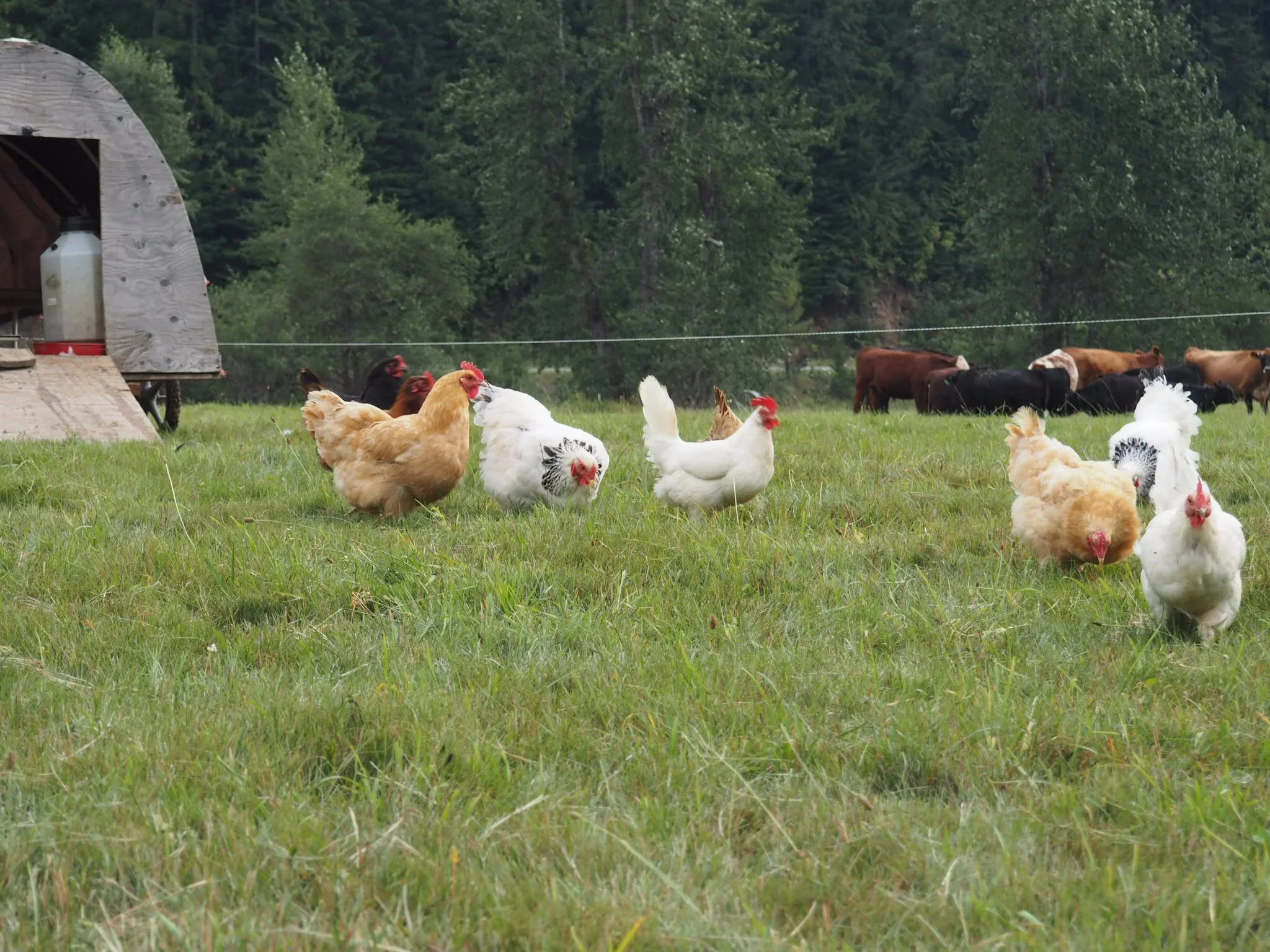
Do you raise other animals?Yes! We have a chicken flock that follows behind the beef animals scratching manure piles and disrupting the fly cycle (the cows really appreciate this). We also have a dairy cow, dairy goats, and raise pigs that help with our compost program.
Do you feed anything besides grass?The vast majority of what our cows eat are the grasses, forbs (maybe called ‘weeds’ by some) and legumes they find in the pasture, but we also offer a supplement tub of rock salt and sea kelp. The sea kelp is an organic product that's made from solar dried sea kelp and serves as a vitamin for the cows. The supplement tub moves with the cows and they eat it at an average of a tablespoon a day per cow.
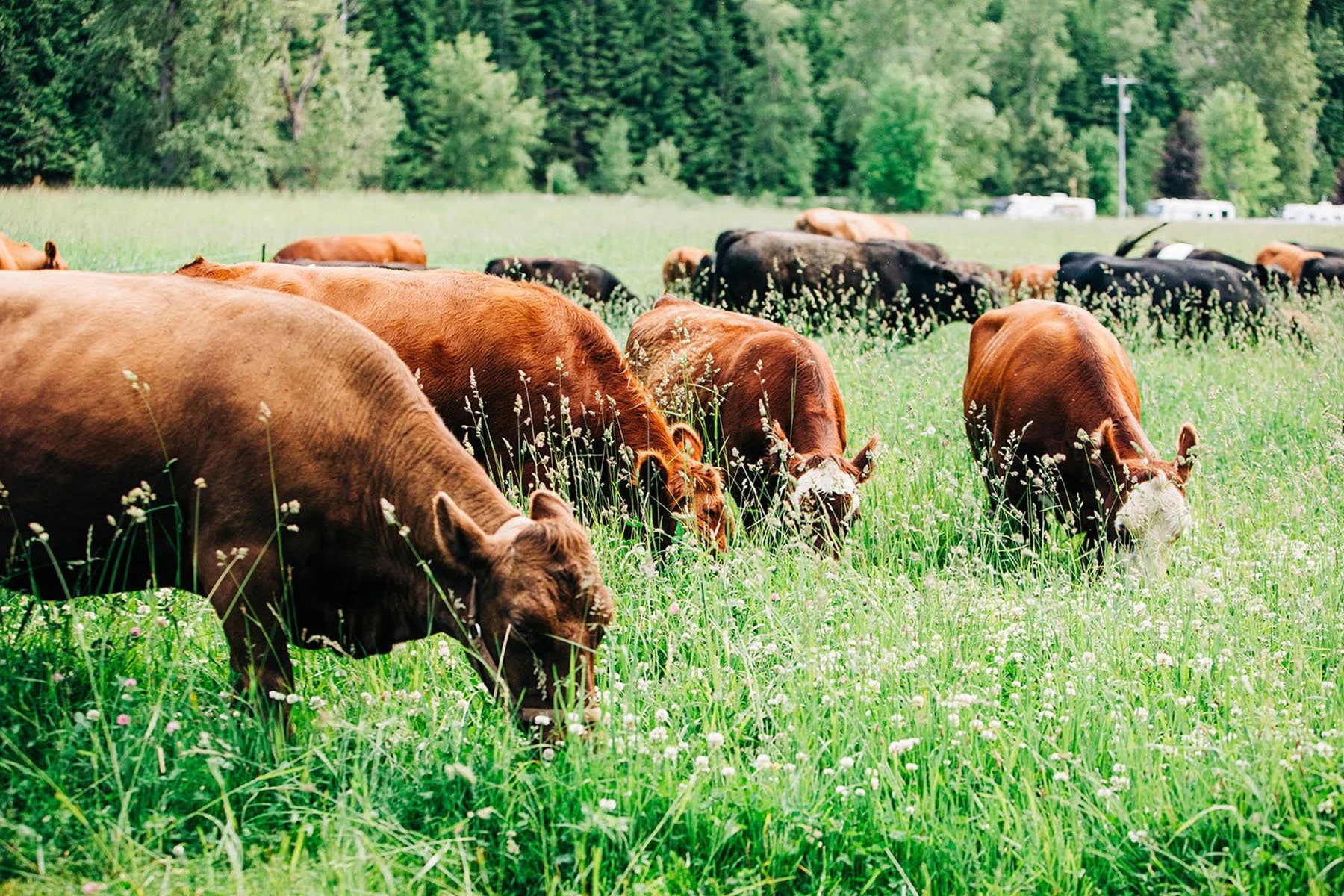
What breed are your cattle?Most of our cows are small-framed Angus with some other breed mixed in. We have some Shorthorn, Dexter, Ancient White Park, Speckle Park and Hereford genetics too. Within the Angus breed, most of our animals are heritage Aberdeen Angus. These cows are a lot smaller than the ones you're used to seeing, and are the size cows used to be when the breed originated in Scotland. The advantage of smaller framed animals is they fatten more easily than large animals, which is how we can ensure you get a nice, fat steak ;)
In general, we don't worry so much about the breed of animal but the individual itself. Is it calm? small framed? fatten easily on grass? hardy? These are the most important attributes and the most sustainable.
aren't cows bad for the environment?They certainly can be, but it's the management of the cow, not the cow itself that is the problem. Cows don't want to be in a feedlot eating grain. When allowed to graze, cows can have a significantly beneficial role in the environment. Remember, cows/bison co-evolved with grasses. They need each other. Giving the grass a rest by moving the cows is critical, and we rotate our herd daily.
Here are our hens following the herd! These chickens LOVE their job and they do a great job of scratching manure piles and eating fly larvae.
What is the Difference Between Premium, Grass Finished, and Burger Beeves That You Offer?
Premium Beeves are the best beef we offer and they are only available in the Fall. These animals are conceived, born, and raised on our pastures. We have been selecting genetics since 2011 that thrive in our specific environment and get fat from an exclusively grass diet. The reason we place so much emphasis on the genetics of the premium animals is that they look and perform differently than the cattle you see in most pastures. The vast majority of ranches raise calves that excel on a grain-fed diet in a feedlot, so to develop our grass-based genetics we've had to source 'old world' cattle that your great grandparents would recognize and tend to be much smaller framed. Our cows look like pigs: short legs, huge wide gut for fermenting grass, and a mellow temperament - basically a well behaved miniature hippopotamus (one of the founders of our herd and favorite bull was named 'Hippo'). We know the entire history and lineage of each animal in this group and we only select the fattest and what we think of as the choicest animals to represent our premium beef. Every year we are getting closer to what we consider the 'perfect' animal.
Grass Finished Beeves are yearling and 2 year old cattle with larger-framed genetics that we grass-finish on our best pastures. Some of these yearlings are home raised, and some we source from local ranches, but they tend to be more conventional genetics, so are larger framed than our premium beeves. They have been managed and cared for the same as all our other harvest animals - exclusively rotated on a diet of high quality vegetative grass for a minimum of 90 days with organic sea kelp and salt as a supplement. They are available from summer through fall.
Burger beeves are mature animals that have some more age to them so can be less tender. As an animal matures, you lose tenderness but gain flavor. In some cultures, like France, a 5 year old cow is considered the most 'prime' animal because it is the best combination of flavor and tenderness. In the United States, we are more accustomed to 'tenderness' being the defining trait. We source these animals from local ranches and grass-finish them on our best pastures and with organic sea kelp and salt as a supplement. They have at least 90 days of grazing green, growing grass and spring/summer sunshine to make sure they are full of nutrients, phytochemicals and minerals that make them healthy for the consumer. The 'burger beeves' provide excellent value: they make awesome ground beef, flavorful roasts for slow cooking/braising, and a small handful of relatively foolproof steak cuts that are tender even on a more mature animal. We keep a burger cow for our family every year.
To sum things up:
If you mostly eat ground beef and are happy cooking roasts low and slow and want the lowest price, the burger beef is for you.
If you want a mix of ground beef, roasts and steaks, the grass finished beeves are an excellent middle ground between the burger cows and premiums.
If it’s important for you to know the entire history of an animal from conception to harvest and want the best eating experience, get the premium.
What makes your beef so cheap?
It’s not! The hanging weight price is just the price you pay us (the farmers) and then you will pay the butcher separately for the kill fee/cut and wrap fees. Our beef is a great value for healthy, nutrient dense meat but it definitely isn’t cheap.
What type of your beef is best for me?
If you mostly eat ground beef and are happy cooking roasts low and slow and want the lowest price, the burger beef is for you.
If you want a mix of ground beef, roasts and steaks, the grass finished beeves are an excellent middle ground between the burger cows and premiums.
If it’s important for you to know the entire history of an animal from conception to harvest and want the best eating experience, get the premium.
What does the butcher ‘save’?
Beyond the hot carcass, the butcher saves hearts, liver, tongue, ox tail, fat, cheeks and hangar steaks (they call this ‘offal’ but there’s a lot of healthy nutrients here we want you to keep). These all belong to you when you buy a beef and we want to see you use them, but you do need to ask the butcher for them (we will remind you again at harvest). Bones for bone broth are encompassed within the ‘hot carcass’, but when you give your cutting instructions to the butcher, please ask for all the offal that you would like to keep.
Why do you dry age and what happens when you do?
Dry aging is the process of air drying the carcass after harvest in a refrigerated and vented space. The butcher generally does this for 10 days. This creates a more tender eating experience and also evaporates some of the water that is in the meat so that it keeps better. Conventional slaughterhouses put a hotcarcass straight into a vacuum sealed bag which preserves their total ‘weight’ (important for maximizing profit) but leaves the meat to stew in a bath of moisture, not ideal for quality. You’ll notice when you cook our beef, there is less ‘shrink’ than with grocery store beef, this is because a lot of the water that would otherwise be coming off in the cooking process already came off in the dry aging process.
What breed Do you raise?
Most of our stock have English foundation (Angus and Hereford being the most common but with a splash of Galloway or White park ) and all are Bos Taurus. We have been selectively breeding and buying cattle that have genetics to thrive on a strictly grass diet. With our mother cow herd we select for small framed cows with mild temperament that hold their condition year round, can keep a calf by their side 10 months of the year, and get pregnant every year in a short breeding window.
Can I save the hide?
Yes, the hide, hooves, stomach, skull, all of these things are available to you. The butcher will need you to pick them up the day of, and usually within a couple of hours of harvest. You will need to let me and the butcher know ahead of time so they can be saved.
*tanning a beef hide is A LOT of work, I’ve done it a couple of times, and it’s really expensive to have a 3rd party person do it.
Can I come tour the ranch and see how you rasie the cattle?
Sure! Please get in touch via email or call us at 208-682-9537